Tuesday, January 27, 2026

Thoughts on Frankenstein, and his kin

I guess that Jane Eyre-ish Secret Garden movie got me in a Gothic mood.  .  .


Last night (and this morning) I watched Guillermo Del Toro's Frankenstein.

I didn't really know much about this particular adaptation so I had no expectations, nor reservations beforehand. The opening scenes in the North Pole had me a little confused; "Did I click on the right movie? Do Frankenstein and Santa live in the same neighborhood?"


BTW- I know thisis Herman Munster, but more on him later.

But as I settled into the story, I could see why the frozen, desolate landscape of the Arctic was appropriate for it. This recent adaptation tells us not just how the monster was made, but how Dr. Frankenstein himself was created; his formative years shaping his pursuit of knowledge and obsession with conquering death. This fits the common conclusion that the Dr.  himself is more monster than his creation.

However, this version also gives us a story from the monster's point of view. His confusion and yearning for affection in the beginning of his 'life', followed by the shame and frustration when he failed  to achieve the Dr.'s expectations. When the Dr. attempts to destroy him, he escapes through the waterway and it's a rebirth for him; he discovers the pleasure that comes from caring for others, and having them care for you in return. He reads books and learns to express himself. It is his desire to have an unbreakable bond with someone that leads him to seek out his creator again, only to be rejected, again.

The film is beautifully presented; rich colors like crimson and emerald green representing Life (blood) and Nature (Earth) contrasted with the stark shades of black and gray in the laboratory, and the arctic landscape, which illustrate loneliness and profound sense of lacking.

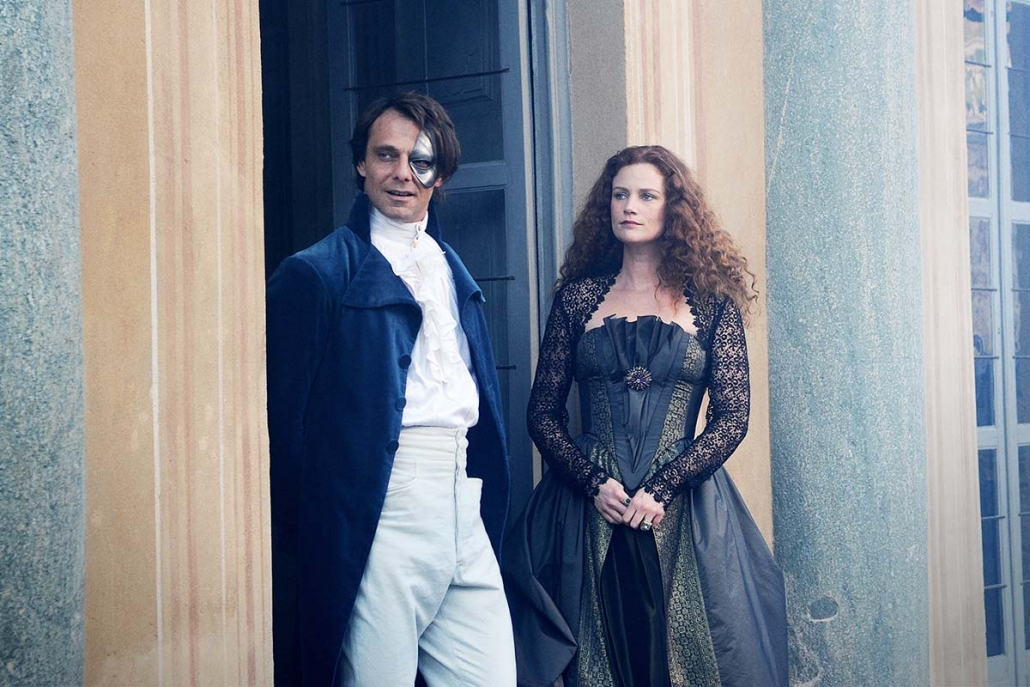
The costumes are absolutely stunning


I tried to remember what my first exposure to Frankenstein was, and the earliest version I can think of watching, and knowing what I was seeing, was the faithful father figure in The Munsters, one of the many old TV shows I watched on Nick at Nite as a kid. I knew Herman was supposed to look like 'Frankenstein' but obviously I had not read the book, or seen any movie versions yet. The next version I can remember is the 1984 Tim Burton film Frankenweenie. I used to love renting this movie from our local movie rental place. Again, I knew it was supposed to be like Frankenstein, but I didn't have direct knowledge of the source material. I just loved the idea of being able to bring a beloved pet back to life (and not in the terrifying Pet Sematary kind of way).

The 1984 version is so good- I can't bring myself to watch the  2012 one

Tonight I decided to watch the classic 1931 version; I have seen it in bits and pieces over the years, but I wanted to watch it from start to finish so I could compare the two. The 1931 version is a more straight-forward telling of the story, with the viewer on the outside watching the Dr. make his monster. We don't get any backstory or insight on either.

It's become kind of an expectation for audiences now to get some kind of backstory on our villains; we want to see what made them the way they are. Like, why is the Witch of the West so Wicked? Guillermo Del Toro's version does justice to the stories of both monsters.

One thing about this version is the absence of The Bride of Frankenstein, and I would love to see this story with a feminist point of view, but I won't have to wait long because The Bride! (directed by Maggie Gyllenhaal) is coming out the first week in March. That story looks like a highly-stylized version that examines the idea of woman being created, for a man, by a man. It's titled The Bride! to put emphasis on her, and remove the indicator that she is 'of' a male, rejecting that Handmaiden's Tale type of reality.

I guess before then I will have to make a point to watch the 1935 version, so I'll be ready to compare them.

Monday, January 26, 2026

The Secret Garden (1949)

I finally got around to watching the 1949 version of The Secret Garden. This was the first film version that was not a silent movie.


I heard about this  version in a podcast episode of Beneath the Hollywood Sign, which discusses classic film. That episode was devoted to stories that featured very bratty children. One of the hosts brough this movie up and while I agree that Mary Lennox is not a very agreeable child, I didn't see her characterization here much worse than the 1993 version that I grew up watching.

The story is mostly in black and white, which lends itself well to the tone of the dispiriting mansion located on the desolate moors. The wind howls, the candle lights flicker, and shadows seem to play tricks with your mind. It feels more Bronte than Burnett.


The mood inside the house is contrasted by the technicolor scenes inside the garden's walls. The movie was made a decade after The Wizard of Oz, but it definitely utilizes the same effect because the aim is to transport the viewer to another world.


I enjoyed it because it's one of my favorite stories, but it's not a movie I see myself re-watching anytime soon. It didn't seem to have the emotional depth of the 1993; it was just actors walking me through the story's events.

I looked to see if the 1918 version is available anywhere, but it's unfortunately a lost film.


Sunday, December 28, 2025

Guess Who's Back? Back again?

 I was thinking over Christmas time about blogging, and how I used to enjoy crafting posts that examined movies or books or just shared some creative projects I had been working on. I stopped blogging because people now favor quick videos on Instagram and TikTok rather than lengthy blogs. However, I never wrote because I expected to garner a big audience; I wrote because I liked doing it. So, I decided to come back.

The holiday season for me means indulging: cookies, egg nog, shopping and classic films.

Although I love my usual standbys like Bright Eyes, Meet Me in St. Louis, Miracle on 34th Street and of course It's a Wonderful Life, I decided to try a couple new ones out this year.

The first one was Star in the Night. This short film from 1945 is an updated version of the nativity story, with the setting being the American Southwest. 


Three cowboys see a star-shaped light on a water tower, and follow it to a small motel. The Innkeeper is an old man, beaten down by life who has no time for the Christmas spirirt until a young Mexican couple, Jose and Maria come seeking a room for the night. His wife talks him into helping the young couple, and he agrees to let them stay the night in his shed. All the while, a mysterous hitchhiker watches the events unfolding, including how the motel guests come together to provide much needed supplies for the couple as news of their soon-to-be-born baby slowly spreads. Definitely worth watching and I found it for free on YouTube.

The second movie I watched was The Man Who Came to Dinner (1942). I admit that I came across this movie on some Instagram videos, which were highlighting a very funny exchange between the two main characters:


It stars the inimitable Bette Davis in her prime, as the assistant to a cantankerous radio personality, a perfectly cast Monty Woolley.

While visiting a well-to-do family, he slips on the steps and gets injured, forcing the family to let him stay and recover under the threat of a lawsuit. While there, he delights in insulting people and meddling in people's business for his own entertainment. Also in this film are two of my favorite actresses, Billie Burke (most famous for playing Glnda the Good Witch) and Mary Wickes, who is more than a few of my favorite movies/TV shows (I Love Lucy, The Trouble with Angels, Sister Act, Little Women, Punky Brewster and more).

The dialogue is hilarious, and my 10 year old son ended up watching most of it with me, laughing along. Plus, now we get to say "Shut your nasty little face!" to each other like an inside joke.

Although I had heard the title of the movie before, and I understood that the Frasier episode titled "The Ann Who Came to Dinner" was a play on the words, I didn't realize that the plot of that episode actually mirrors the movie, too.

*The annoying character of Ann the insurance woman on Frasier is actually played by Julia Sweeney, a Saturday Night Live alum who introduced me to the glory of Pat, the androgyne.*

This movie was available free on Tubi, but the number of comercials made the movie much longer, which was annoying.

The last movie I sampled was Our Vines Have Tender Grapes. This movie is not necessarily a Christmas movie but it does have a couple nice scenes set during the holiday.


This film stars Edward G Robinson, departing from his typical gangster character to play a soft-spoken farmer, who lovingly teaches his young daughter the lessons of life.

His wife is played by Agnes Moorhead, who is most recognizable as Endora, the mischievous mother of Samantha on Bewitched. 

Margaret O'Brien plays Selma, and her recitation of the Christmas story in church is as full of Christmas wistfullness as the "Have Yourself a Merry Little Christmas" scene in Meet Me in St. Louis.

The film follows the family from day to day in their small Wisconsin town, and it reminded me of the play Our Town by Thornton Wilder. And when her father gives her a newborn calf to raise, I couldn't help but smile because it reminded me of one of my favorite books, Charlotte's Web.

This film was not available anywhere for free, so I had to rent it on Amazon Prime.

Overall, I have three good movies added to my Christmas film repetoire.

Thursday, August 4, 2022

Beauty and the Beast (2014)

 Today as I was browsing the Roku channel for something to put on 'in the background' I discovered a Beauty and the Beast min-series I had never heard of before.


This version does not have the magical aspects of the Prince being transformed into a beast creature, nor the household objects personified as his faithful servants nor enchanted rose couting down the time. The Prince has become a Beast metaphorically because after losing his wife, his grief and bitterness make him cruel and indifferent to others.

I enjoyed this retelling, mostly because it it presents itself as a mash-up of the classic tale and other stories which I love.

The Phantom of the Opera: Although the Prince is a Beast mostly due to his behavior, he has scars on his face which he covers with a partial mask.


The Secret Garden: Bella finds an abandoned greenhouse, which has been locked up for years because the Prince is haunted by his memories of his dead wife, and she brings the greenhouse back to life


Cruel Intentions: The Prince has a distant cousin, Lady Helene, who has desired the Prince for years, and wants to marry him herself. After Bella arrives at the castle, she senses the competition, and makes a bet with the Prince that he cannot seduce her within three weeks.


For anyone who might want the 'classic' Beauty and the Beast story, there is still plenty of that in this rendition:

-Her name is Bella (very close to Belle)

-Her father is poor, and she offers herself in servitude to the Prince to help him

-Reading, learning and libraries are still featured as Bella's passion. In fact, rather than presenting her with a beautiful library, the Prince leads her to a forgotten room with piles of musty books, and tells her that he wishes her to organize and catalog them all

-The Dress


Worth watching if you love Beauty and the Beast.


Wednesday, December 1, 2021

"Sing a Song of Love"

 As I said in the podcast I recently spoke in, there has been an emerging trend in Peter Pan retellings to focus on female perspoectives and interpretations of the female characters.

For example, in Hook (1991) we see a Tinkerbell that departs from the mid-century pin-up girl image. Julia Roberts' portrayal of the pixie includes reddish brown hair in a shaggy pixie cut (obviously), a brown ensemble that looks to be made from leaves, and bare feet, rather than the blonde bun, skimpy green mini-dress and delicate slippers that the animated Tink donned:


Then Peter Pan (2003) gave us a Wendy who was a little more adventurous and precocious than her predecessors. When she's in her room with her brothers, she is not waltzing and playing the Mother, she's sword fighting in armor. This Wendy was not content to stand on a rock, applauding Peter Pan; she wanted to fight along side him. She dreams of being a novelist, writing adventure stories, and even dabbles in the idea of piracy, thinking that she'd call herself Red-Handed Jill.


The 2020 film Wendy builds on this feminist interpretation of Wendy even more; now the character has the title as her own! She wears an old t-shirt that says Prison Rodeo on it, and rather than having Peter Pan appear at her window to usher her off to Neverland, she climbs out her window, then jumps on a passing train in order to join the mystrerious boy. She seeks him out, and shows agency to achieve her dreams of adventure, rather than just hoping for them.


I'm not going to write too much about that film now, because I did a blog on it last year.

I am now reading the book Beasts and Beauty: Dangerous Tales, which is a collection of classic tales that  have been reimagined, and they have darker tones than many of the versions we already know.


There is a Peter Pan inspired retelling, from Wendy's perspective again which I greatly enjoyed. It illustrates many of the themes in tyhe text that I enjoy discussing.

-  -  - -  - SPOILERS AHEAD-  -  -  -  -

It begins "Dear you, sing a song of love."

Wendy narrates, and she confesses to the reader that intially she was charmed by Peter Pan, and she wanted him to love her. But as she began to grow up, he lost interest in her, and in turn she lost interest in him. After being kidnapped by pirates during one of her Spring Cleaning visits, she waits several days for Peter to realize she's missing and come to 'rescue' her, and she ends up falling in love with a pirate. Even though she is in love with him, she knows that she cannot stay in Neverland with him, so she returns to the real world, but uses her Spring Cleaning trips to see him, rather than Peter Pan.

In the real world, she married an ordinary man, and settles into a life of medicority; she is comfortable, but not in love with him. Eventually, she becomes pregnant, and when she gives birth, she is told by the doctor that her son has a weak heart, and will not survive long. She has no choice except to hold him, and wait for him to die. Death has always been a theme in the Peter Pan mythos.*

Her pirate love appears at the window to take THEIR son away to Neverland (having a child out of wedlock!), he pleads with her to come with them.

Wendy tries to fly, but even with the help of pixie dust she is unable to make herself lift off. She laments "My son's birth was the last bit of magic my body could take. I'd grown up once and for all. I couldn't live between worlds anymore."

The minute you become Mother, you become Other. 

This is one of the bittersweet truths contained in Barrie's text;parenthood, specifically motherhood, changes us. It has the greatest joys, and the biggest heartbreaks all at once. But through it all, sing a song of love.


 *Peter Pan is first introduced in Barrie's book The Little White Bird as a boy who is also part bird, and lives in Kensington Gardens with the fairies. When he is not playing, he takes care of the children who've become lost, meaning he buries them in the Gardens and gives them little headstones.

And in the novelization of Peter Pan, originally titled Peter and Wendy (1911) Mrs. Barrie states that his name sounds familiar. The legend she'd heard is that when children died, peter Pan would fly halfway to the afterlife with them, so they would not be scared.

And of course, there is also Peter Pan's famous quotation "To die will be a great adventure."


Sunday, November 28, 2021

Think lovely thoughts. . .


Yesterday I took my son John to see his first show on stage: Peter Pan.

It was something I've been dreaming about for so many years, before I even had a child. I remember the first time I read the Peter Pan novelization, and the description of Mrs Darling wishing that two year old Wendy could "stay this way forever", thinking how strange it must feel to be a parent, and to simultaneously want your children to grow up but also stop time so they can be young forever. I always imagined if I had children, taking them to see Peter Pan would be such a magical experience.

This story is so important to me in so many different ways: as a child, as a reader, as a Children's Literature scholar and a librarian, and as a parent now.

I've been interacting with Peter Pan texts for most of my life: the Disney animated movie, the book, the cartoon Peter Pan and the Pirates, and movies such as Hook (1991), Peter Pan (2003), Finding Neverland (2004) and Wendy (2020).

I played Peter Pan games when I was a little, and now I read the books (including sequels and reimaginings). I've done multiple papers on themes in the story for college and graduate classes and I never get tired of it.

Seeing it on stage with my own child though might be one of the most important ways I've experienced this stpry, and even though the story continually gets updated and adapted for audiences, in order to keep it relevant and relatable, the heart is still the same.


I spoke in a podcast about the performance, and how it demonstrates the changes to the text over time, so I'll leave off with that:


Sunday, February 28, 2021

Every Time I Turn Around

 There's another reboot to watch. This time it was the Punky Brewster one. 


I hoped it would be watchable, but I wasn't expecting a whole lot from it. I was pleansantly surprised, though.


**************SPOILERS AHEAD*************************

Obviously, there are a lot of references to the original series; my favorite is when Cherie's fiancé says to her "You have an irrational fear of refrigerators" and Cherie replies "I have my reasons" because that's a pretty memorable episode. It's also basically an homage to the 80s, and there's as almost as  much cheese as Fuller House served up.

However, as I watched the series (yes I binged it in all of two days)I realized that the series was actually doing a nice service to the original, and also similar types of programs, by making inclusiveness a priority.

For example, Punky's longtime BFF Cherie is gay, and gets engaged to her girlfriend. Cherie confesses that if her grandmother were still alive, she might've have been critical about that idea. Also, when Punky is planning an 80s themed block party and talking about how much fun the decade was, Cherie reminds her how much homophobia existed back then (and obviously, the AIDS epidemic was also raging) and how she is glad we've moved beyond that time.

I was also glad to see how much emphasis on different family make-ups there was. Punky herself was abandoned by her mother as a child, sent to a group home, and was eventually adopted by Henry. Grown up Punky has a daughter, as well as two adopted sons, and fosters another girl. There is family discussion about the difference between foster care and adoption, and Punky reminds her two sons that if they ever become curious about their birth parents, she will support them and help them search. 

That is one aspect that really disappointed me about Fuller House; Stephanie originally says she is not able to have children, and that would have been a great opportunity to have a wonderful story arc about the adoption process, but instead they have Kimmy Gibbler be the surrogate mother (because that leads to more wackiness) and then at the series end Stephanie finds out that she has somehow become pregnant anyways. It all magically worked out with no inconvenience or setbacks or anything! Not only does Punky Brewster give screen time to foster care and adoption, but it also shows us the mixed emotions that come when adopted children make contact with their birth parents (when Punky's mother finds her).

The last thing I feel is worth discussing is Punky's son Daniel is gender non-conforming. He uses his male name and sometimes wears boys' clothing, but he also wears his hair long and paints his nails and wears a sarong at one point. When Punky tries to find the correct terms to describe him, and have a discussion with him (gender fluid, transgender, non-binary, etc) her daughter simply asks "Why do you need to label it?"

I loved Punky Brewster when I was little, and I continued to watch it when it went to reruns. I even read the graphic novel version that came out a few years go, and put it in my library at school.  In fact, I kind of credit this character for influencing my home décor style; I love my house to be colorful and whimsical and a little funky, and I loved the sets on the new series.

It may not been a show that everyone was clambering for a reboot of, but there's more substance there than the trailers let on.


Man, I wish so much that I still had my Punky Brewster sneakers: